Disclaimer: This article explores the author’s individual opinions on the film Michael (2026). Some readers may disagree with the views expressed. This article also contains spoilers.
Music biopics have become somewhat of a genre on their own within the last decade. Through films like Bohemian Rhapsody, Elvis, Rocketman and Whitney Houston: I Wanna Dance With Somebody, many iconic musicians are being reintroduced to newer generations, with their music being shared and remembered for years to come.
The latest addition to the genre is Michael, a biopic following the life of Michael Jackson from his childhood years up to the end of his ‘Bad’ tour in 1988. However, reviews for the film have been rather mixed; critics seem to find it underwhelming, while many Michael Jackson fans seem to embrace it wholeheartedly.
As for me? Well, I land somewhere in the middle. As both a Michael Jackson fan myself and a self-proclaimed film buff, let’s dissect the latest portrayal of everyone’s favorite King of Pop!

Promotional poster for Michael (2026)
Don’t Stop ‘Til You Get Enough!
- Hee Hee’s Never Felt More Accurate
The biggest positive note on the film undoubtedly has to be Jaafar Jackson’s portrayal of his uncle. There’s always a risk when it comes to portraying big names like Michael Jackson’s; fans are already attached to every lyric, dance move, and expression. Many actors face the pressure of doing their portrayed character justice, more so in a biopic, since these ‘characters’ are real people! Oftentimes, an actor’s performance of a real person could feel exaggerated or parodied.
Jaafar dodges that completely.

First image of Jaafar Jackson as Michael (left) and Michael Jackson (right)
Certain frames in the film had me thinking, “It’s Michael!”. To me, that is what sets apart a good actor from a great one; when the line between performance and reality becomes so blurred that the two practically fuse into one and the same.
Jaafar doesn’t just mimic or impersonate Michael’s voice or movements; he captures the essence behind them. The softness in his speech, the vulnerability in his facial expressions, and even the way he dances capture Michael perfectly and show younger audiences the true legacy of Michael Jackson.

Jaafar Jackson (left) and Michael Jackson (right)
- It’s Human Nature
One of the film’s biggest strengths is its willingness to address the more painful and darker aspects of Michael Jackson’s life, rather than simply focusing on fame and music. The movie made sure to highlight that Michael’s life, contrary to what many would assume, wasn’t as shiny and glamorous.
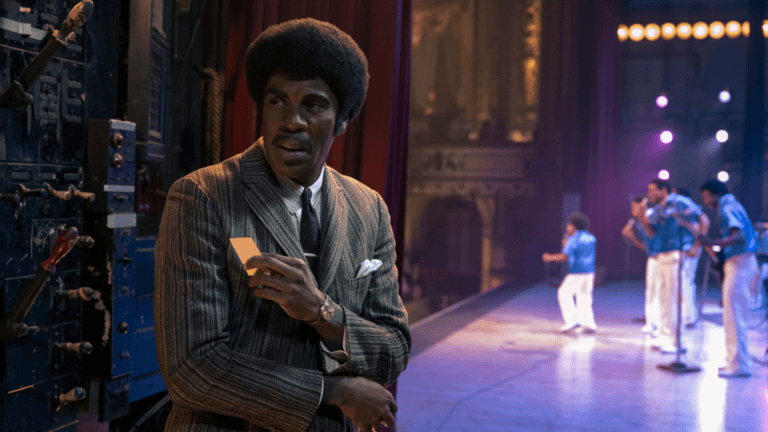
The film touches on Michael’s relationship with his father, Joe Jackson, who both physically and emotionally abused him and his brothers growing up. This ultimately shaped Michael’s perfectionism and unfortunately, his insecurities as he got older. Joe constantly pressured Michael, stripping him of a normal childhood filled with love, wonder and laughter. Seeing this issue portrayed on the big screen helped shine a light on one of the most prominent and constant struggles faced by Michael, especially in his rise to fame.

Joe Jackson, played by Colman Domingo, in Michael (2026)
The film reaches its climax with the Pepsi commercial, in which Michael suffered from second-degree burns to his scalp when filming a collaborative commercial between The Jackson 5 and Pepsi back in 1984. This scene, like many in other biopics, truly showcases the immense pressure and sacrifice many celebrities often put themselves through in hopes of delivering the perfect performance for audiences.
Behind the Hollywood glamour, stunning choreography, and perfect shows lies a dangerous reality that many rarely think about. Performers are constantly expected to entertain on a massive scale, often pushing themselves both physically and emotionally beyond safety limits to maintain perfection for their fans. The film captures this reality perfectly, reminding viewers that entertainment does not come without risk. To me, when you leave a cinema hall with this in mind, the film did something right.

Jaafar Jackson as Michael Jackson
- Don’t Matter If You’re Black or White
One of the most important aspects of the film in terms of audiences and their understanding of Michael Jackson has to be how it addresses Michael’s vitiligo. Over the years (and to this day), Michael faces ridicule over speculation that he’s bleached his skin and made himself white. However, many people simply aren’t aware that Michael suffered from vitiligo.
Vitiligo is a non-contagious skin condition, whereby the immune system destroys melanocytes, resulting in the loss of skin pigment. This caused Michael to have various white patches on his body, which spread over time.

Vitiligo can be seen across Michael’s skin
Smooth… But Not Exactly Criminal
- Beat It, Biopic Clichés
Every action has its equal opposite reaction, am I right? The film may have had its positives, but that doesn’t mean my outlook on it is without criticism.
Although Michael succeeds in telling the star’s story and gaining audience sympathy, it falls short creatively. The film’s storytelling style and narrative feel generic, following a biopic formula we’ve seen countless times before. While we can’t simply alter a celebrity’s life or legacy, we can certainly change the way it’s narrated or stylized for audiences. From this aspect, the film felt too safe.

Michael Jackson in Michael (2026)
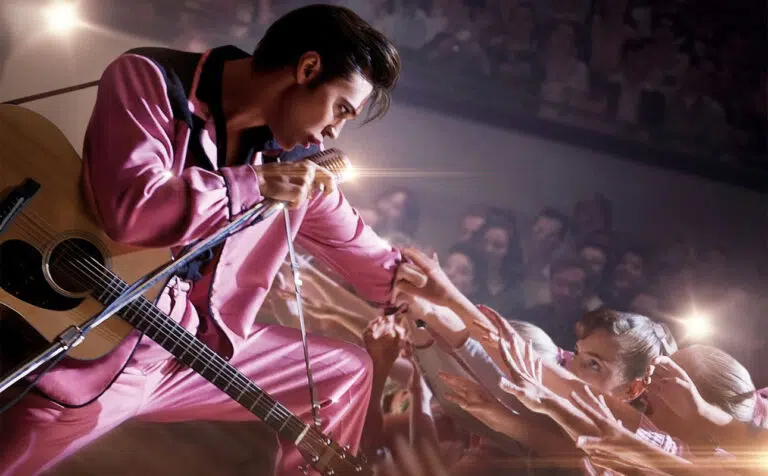
Comparing Michael to other biopics like Elvis and Rocketman best explains my point: Elvis is told from Colonel Tom Parker’s point of view, giving the story a unique spin, while staying true to Elvis Presley’s struggles, fame and music. Michael, on the other hand, lacked unique narration, and we see everything in the film’s time. While this isn’t necessarily a bad thing, it’s simply nothing special either, following formulas set by almost every other biopic.
Both Elvis and Rocketman also displayed unique styles; Elvis has gorgeous cinematography, playing on colours, styles and chaotic visuals, while Rocketman follows a jukebox musical-like flow, giving audiences a dazzling number every now and then. Michael’s style just followed that of many other films in the biopic genre.
The pacing of the film was also an issue in my books. There were times I felt a little bored, despite being excited beforehand to watch it. Elvis runs at 2 hours 39 minutes while Michael only runs at 2 hours 7 minutes, yet I felt completely captivated and immersed by the former rather than the latter.
This is where it fell short. I longed to feel something with this film; to feel overwhelmed by Michael’s world. But I simply didn’t feel the attachment I’d hoped for.

Austin Butler as Elvis Presley in Elvis (2022)

Taron Egerton as Elton John in Rocketman (2019)
- It’s Not Bad, But Is It Special?
While Michael is one of the ‘good’ biopics, it doesn’t stand out to me as ‘great’. Any ounce of attachment or inclination to rewatch the film is purely for the spectacle that is Michael Jackson in itself, and a pre-existing love for him and his music.
Michael Jackson’s fame is so overwhelming that whether you’re a fan or not, you’ve undoubtedly jammed out to at least a few of his songs. The nostalgia, the lyricism and the man himself are what convince me to set the film as passable in my books. Not bad, but just enough to keep me thinking about it, at least for a little while.

Jaafar Jackson as Michael Jackson in the ‘Thriller’ sequence
Final Thoughts!
Michael may not redefine the film genre, but it shines in something arguably more important; it restores humanity to a celebrity who’s spent decades, even after passing, of being misunderstood and criticized. The film, combined with Jaafar’s uncannily identical and committed performance, makes a stunning portrayal of Michael Jackson’s life, or at least until the end of the ‘Bad era.
The film’s strength lies in sincerity and a deep, heartfelt commitment to keeping Michael Jackson’s legacy, music and memory alive. And for that? I’m glad this film was made.
Written by Ashley Anne Danker
Edited by Sarah Wong