Posted inCreative Hall Lifestyle Short Stories
Remembering Living

“The thing about Alzheimer’s is that it’s sort of like all these little, small deaths along the way before they physically die.” -Lucinda Williams

“The thing about Alzheimer’s is that it’s sort of like all these little, small deaths along the way before they physically die.” -Lucinda Williams


On 20th August 2021, the Sunway Psychology Club had organized a talk to share about the psychology regarding interrogations and confessions. The speaker of the talk, Dr Chung Kai Li, who is a PhD holder in Psychology from Edinburgh Napier University in Scotland, is currently the Deputy Head of Section and the Programme Lead at the School of Psychology and Clinical Language Sciences in the University of Reading Malaysia. She has been studying investigative interviewing for her research and often works closely with child victims and witnesses.

In this month’s Yay or Nay segment, our writers Julia and Hannah tackle a more serious topic that has been brewing within many people’s thoughts. Without a doubt, we have all been exposed to various types of encouragement regarding genuinity and being true to oneself. However, wherein lies the boundaries of being one’s self if society frowns upon it? In today’s article, our writers will be exploring whether or not there are limits to being oneself in public and to what extent society is truly accepting towards socially deviant behaviours.

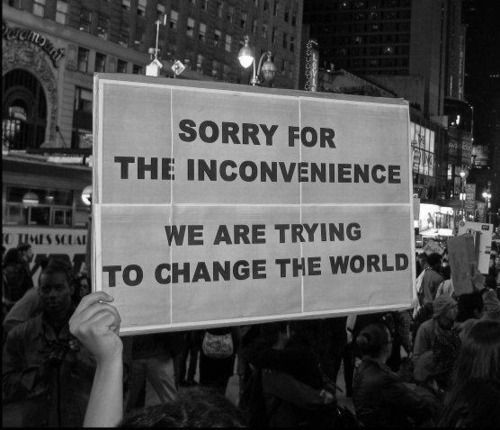
Welcome to our brand new installation―Echo-pella, a special segment specially dedicated to songs. Listening to music is almost intrinsic and has become an essential characteristic to humans. In honour of our theme of the month, music is not only a form of artistic, creative and aesthetic expression, but it also has an immense revolutionary quality. Throughout history, this has been expressed in songs which represent a desire for change. From protesting and condemning unjust situations in our socio-political reality, to capturing revolutionary movements and raising hope for a better future. This expands music into a canvas encompassing the expression of our human experience and journey. Music is an entire language on its own which has had a significant cultural and political impact on real-life events all around the world; bringing positive change at historic moments. It also has the ability to unite and connect people from different walks of life and may even have the power to change the world.

“Sexual and Gender-Based Violence is not a female issue, it is a humanitarian issue. It affects us all.” Sexual and Gender-Based Violence (SGBV), often abbreviated to Gender-Based Violence (GBV), refers to harmful acts of sexual, physical, mental, and emotional abuse perpetrated based on gender. GBV, in a modern context, is the term attached to aggression against women and girls. In fact, a popular statistic details that 1 in 3 women have experienced GBV. However, the reality is that this number is far larger. In all corners of the globe, girls are born into neighbourhoods and societies that are unsafe, unjust, and discriminative. Be it catcalls, sexual advances, unequal salaries or other common injustices; these occurrences have become normalised in the lives of women and girls which have no right to be normal in the first place.


The popular misconception of happiness is that once we obtain tangible things or experiences such as achieving a certain grade, the opportunity to work in a prestigious company or a chance to travel the world- we would be happy. Phrases like ‘When I have this amount of money in my bank account, I will be happy’, or ‘when I lose this much weight , I will be happy’. Everyone has this ideal notion of attaining and acquiring certain physical things and opportunities that would result in happiness. However, in reality happiness is achieved from within. No amount of external tangible objects, experiences and people can make you truly happy. Nevertheless, aligning your perspective to be more receptive towards gratitude will do wonders in helping you to achieve inner happiness and the appreciation of the biggest miracle and mystery to ever occur- life.

Princess Diana wearing the ‘Elvis dress’ during a visit to the Culture Centre in Hong Kong
Had Princess Diana still been alive, she would have turned 60 just last month. She was known for several things – among these, she was probably best known for her charity work, impeccable style and untimely death. She championed various causes, and most notably fought against the stigma surrounding AIDS patients. Princess Diana was also known as a style icon, for she single-handedly revived dying fashion trends as the clothes and accessories that she was spotted wearing often flew off the shelves, racking up millions of sales. Sadly, her life was cut short when she died in a tragic car accident at the young age of 36.

Picture this: a strong woman who has all the traits to take on the world with her own prowess and seemingly infinite courage. She is the epitome of what an empowered woman should be: she can shatter the demarcated bounds of achievements, she can nonchalantly seize the attention of a room so that her voice is heard, and she can fight, and she does so effortlessly. Odds are that the first image you conjured up is the carbon copy of the ones we have all seen or read about in the media; the woman who rejects all that is deemed feminine and carries herself with the confidence of a man, whilst discarding all her “feminine-like” characteristics. But why do so many of us look up to and aspire to be women like these?

Trigger warning: The following article contains discussions regarding suicide, which some readers may find disturbing or traumatizing. Viewer discretion is advised.